
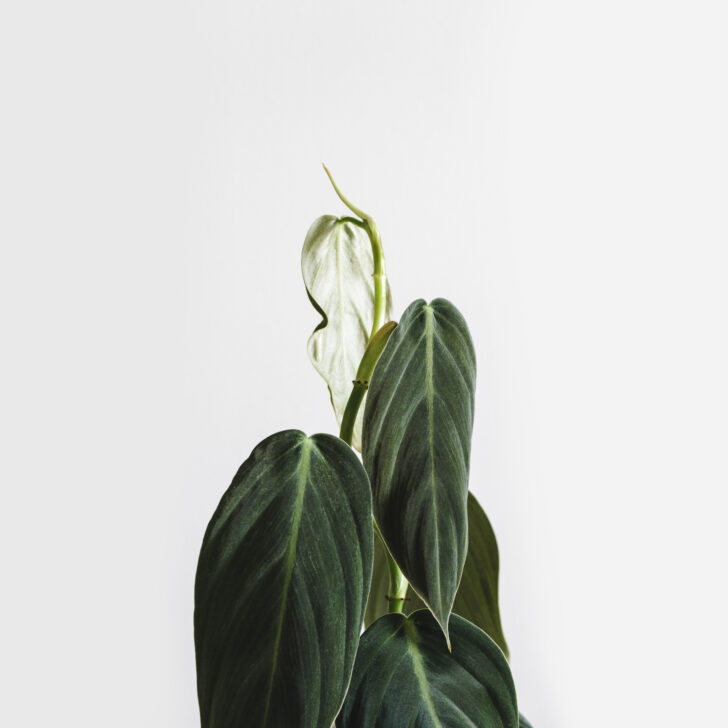
Philodendron gigas is an aroid Philodendron native to Panama. Their velvety, tri-colored leaves make them a very attractive and sought-after plant.
Because they are sought-after, they are often hard to find at your local nursery, so snap it up if you see one!
All the information about how to care for your Philodendron Gigas is below.
What Is A Philodendron Gigas?
Philodendron gigas is one of the largest varieties of philodendron. In the right conditions, they can grow to between 8-10 feet in height indoors, with leaves ranging from 1-3 feet in size.
The leaves of a Philodendron Gigas grow in multiple shades of green with tri-colored leaves. Leaves turn copper as the plant matures. Philodendron Gigas are climbing plants and fast growers, usually doubling in size in a year. They can be grown on a climbing structure or in hanging baskets.
Philodendron Giga is most often grown as an indoor plant, but it can also be planted outdoors in USDA hardiness zones 9b–11.
Philodendron Gigas Preferences
At a glance, the Philodendron Gigas prefers the following growing conditions:
- Well-draining, rich soil that holds some moisture but doesn’t get soggy.
- Average watering intervals with heavier watering during the growing period. Do not overwater your philodendron gigas or allow it to stand in wet soil.
- Strong light, but avoid direct sunlight. Philodendron gigas will grow in low light but may become leggy.
Best Light Conditions For Philodendron Gigas
Philodendron gigas are best suited to indoor growth with indirect sunlight. Your Philodendron Gigas will thrive near a window that gets good, filtered sunlight. Leaves scorch easily, so always avoid direct or harsh sunlight.
They can be grown in lower light, but you may find the lush foliage will become leggy, and the leaves will not reach their full growth size. To let a Philodendron Gigas reach its full potential, keep it in a well-lit area.
Best Temperature Range For Philodendron Gigas
Philodendron Gigas is a tropical plant, so its best temperature range is 58⁰F-88⁰F, while temperatures below 50⁰F are not recommended. Keep the plant away from other temperature factors like AC vents, heat vents, and cold drafts, as these may slow growth or damage the plant.
Philodendron Gigas prefers a humidity level of between 60-80%. It can adapt to lower humidity but ensure it is watered correctly to compensate for the lowered humidity.
How To Water A Philodendron Gigas
While Philodendron gigas require a lot of water, overwatering is not good for it. Don’t let it sit in soggy soil or water.
Take time to test how much water it needs and how often you need to water it in your area. The top two inches of soil should be moist; if not, it is time to water. The soil should never be soaking but wet, and that excess water drains off.
Adjust your watering schedule based on the season. In summer and spring, give it a little more water than in the colder months as the plant will be actively growing and needs more water. Taper off in fall and winter.
What Is The Best Soil For Philodendron Gigas
Philodendrons are thirsty plants but don’t tolerate sitting in water or soggy soil. The right soil mix will hold onto just the right amount of moisture to help your philodendron Gigas thrive.
Plant it in fast-draining soil that can retain moisture well. Philodendron gigas like a neutral to slightly acidic pH.
If you prefer to make your own soil mixes, equal amounts of the following mixed together will give you a well-draining and balanced soil:
- Orchid bark
- Perlite/Vermiculite
- Worm castings
- Sphagnum moss
- Activated charcoal
Top Care Tips For Philodendron Gigas
For healthy and happy plants, try some of these tips:
- Let the soil in the pot dry for longer than other indoor pot plants, to about 70-80% dry before watering.
- When watering, flush the soil with extra water and drain excess water completely. This will remove salt and mineral build-up and oxygenate the soil.
- Avoid using heavy fertilizers. Rather report in a good soil mix to revive the plant if needed.
- For Philodendron Gigas planted in pots on a porch or in a garden, consider placing a 20-40% shade cloth over the plant to filter the sunlight.
Common Issues And Troubleshooting Your Philodendron Gigas
Although Philodendron Gigas are hardy plants, they do have issues that need to be addressed when they arise.
The most common issues are caused by overwatering, but there are some fungal infections and pests to look out for.
Signs that your Philodendron Gigas has been overwatered:
- Yellowing leaves
- Brown and soft leaves
- Rotten smell from the roots
- Visible root rot
Whenever you see any of these signs, immediately drain excess water from the pot, check the soil moisture and possibly report in better draining soil. Check your watering schedule and adjust it to longer intervals or only when the soil becomes dry in the top two inches.
Signs that there may be a fungal infection on your philodendron gigas:
- Yellow leaf spots
Common pests found on philodendron gigas:
- Aphids
- Brown Scale
- Mealybugs and spider mites have been known to invade Philodendron Gigas but are less common.
How To Repot Philodendron Gigas
Philodendron gigas like a loose root system, so choose a pot to repot your plant in that is about 2” bigger than the one it is in.
Alternatively, keep it in the same pot but refresh the soil. When repotting, trim away any damaged or mushy roots.
Do not repot the plant to a pot much larger than the one it is in, as the extra moisture in the additional soil may cause root rot. Ensure that the new pot is not much bigger than the root ball.
- Lightly dig down into the sides of the pot, loosening the soil.
- Remove the root ball from the pot and shake off any excess soil.
- Trim away any damaged, excess, or mushy roots.
- Fill the first few inches of the new pot with the soil mix recommended above, make a well in the middle and place the root ball into it.
- Using a small spade, sprinkle soil into the pot, ensuring it spreads between the roots.
- Fill the pot with soil and lightly compact it.
- Water thoroughly and drain off any excess water.
- Place it in a bright spot, but not in direct sunlight.
How To Propagate Philodendron Gigas
Propagating in spring will most likely produce the best results as the plant is actively growing.
To propagate by stem cutting, follow these steps:
- Cut the stem of the philodendron between two growth nodes. Cut so that there is a half-inch section left below the node on the cutting.
- Place the cutting in water. The growth node should be covered in water, but the leaf is out of the water.
- Place the cutting in bright but indirect sunlight.
- Change the water every 5 to 7 days.
- Roots will appear after about two weeks. Leave the cutting to grow roots to about 2 inches long, then plant it in a pot.
To propagate a Philodendron Gigas in sphagnum moss, place the cutting inside a small container with the moss, packing it tightly around the growth node. Water well, and keep the moss moist for 5 to 7 days.
Conclusion
Philodendron Gigas is a beautiful and sought-after variety. It is loved for its tri-colored leaves and size. Like all philodendrons, it is susceptible to overwatering and root rot. Ensure the plant doesn’t sit in water or that soil is kept at just the right moisture. Follow the steps above to help your philodendron Gigas throve and enjoy this beautiful plant in your home.