
Philodendron comes from two Greek words and means “tree lover or love tree.” Gardeners of all varieties are certainly fans of this family of plants. There are many different plants in this family, some still undescribed and adequately documented. They are imposing, attractive plants, and none more so than the magnificent Philodendron Splendid. The name is well deserved.
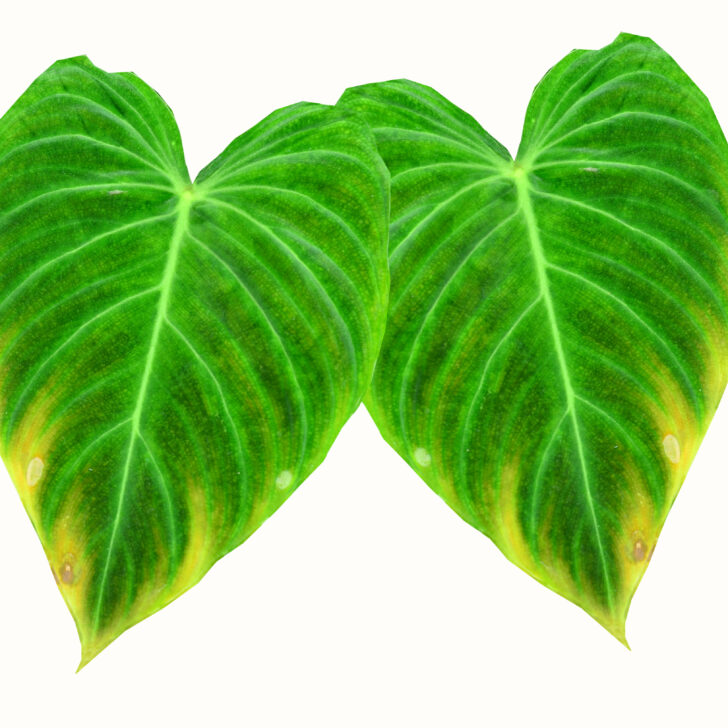
Philodendron splendid is a hybrid plant created by mixing Philodendron melanochrysum and Philodendron verrucosum. It is a fast-growing climber with huge heart-shaped velvety leaves. The underside of the leaves is red and green, while the top surface is intense green with cream-colored veins.
Philodendron splendid is sometimes confused with Philodendron glorious. Splendid is a climber, and Glorious is a creeper.
What Does Philodendron Splendid Look Like?
Philodendron splendid is an impressive plant. The leaves may grow up to two feet long and one foot wide. This is not a plant you will overlook.
The surface of the leaves is covered in a velvety fuzz with contrasting cream-colored or light green veins. The appearance of the leaves is ideal for adding texture to a room.
The undersides of the leaves have maroon or red tinges mixed with green. New leaves emerge with an intense red flush.
How Big Is The Philodendron Splendid?
Philodendron splendid plants grow to approximately ten feet in the open or in their natural habitat. They generally grow to six to eight feet when housed indoors.
This large plant needs an extensive root system to support it. If you are growing the Philodendron splendid indoors, you will need to consider this
when choosing a pot.
The Philodendron splendid is a climber, and the size of the available space limits its growth. The name philodendron, meaning tree-loving, indicates its need for trees to act as support for the vine.
Where Does Philodendron Splendid Come From?
Philodendron splendid comes from the rainforests in Ecuador and the West Indies. It is grown under the tree canopy. Its large leaves allow it to survive in the diluted light that filters through.
Although most plants are found in the rainforest, they can also be found in swamps and shaded riverbanks.
Philodendron splendid is a relatively rare plant outside of its natural habitat. Most sellers usually have only two or three plants in stock at any time. Plants are expensive, and you can expect to pay one hundred dollars for a good specimen.
Are Philodendron Splendid Plants Hard to Care For?
Philodendron splendid plants are not difficult to care for. Their needs can be met by following some simple rules. Most Philodendron splendid that fail to thrive are usually being given too much care.
What Size Pot Is Right For A Philodendron Splendid?
Getting the correct pot size for a philodendron is critical to ensure its growth and health. A pot that is too small will affect the overall plant and leaf sizes. There are two methods for choosing the pot for a philodendron splendid.
- Choose a plant pot that is a little bigger than the root ball. This will help to keep the plant from growing too big but still allow it enough space.
- Measure the distance from the soil to the topmost leaf. Divide this distance by three and choose a pot with this diameter.
The pot must drain as Philodendron splendid does not enjoy waterlogged soil. Heavy ceramic pots are popular to use with Philodendron splendid as they provide a solid base that does not tip easily with the weight of the plant.
What Is The Correct Soil For Philodendron Splendid?
General potting soil is adequate for Philodendron splendid. They are not heavy feeders and have no need for rich or specialized soil.
It is important that the soil drains well. This can be achieved by adding vermiculite or perlite to the soil. If your plant has yellow leaves, increase the drainage of the soil.
How Much Water Do Philodendron Splendid Plants Need?
These plants thrive on moist but not wet soil. Water the soil and not the leaves. The soil should be moist when touched, and the leaves must retain their green color. Too little water will result in brown burnt-looking leaves. Too much water will make the leaves become yellow.
Water small amounts frequently. In the rainforests, it rains every day, but the many plants prevent the soil from becoming waterlogged. Try to mimic this water environment.
Do not provide a lot of water irregularly and then allow the soil to dry out. Philodendron splendid will not thrive in these conditions.
Philodendron splendid plants have aerial roots, growing above the soil. These can be sprayed with water to encourage leaf growth and quality.
How Much Light Do Philodendron Splendid Need?
Philodendron splendid do not like direct light or intense sunlight. Bright indirect light is best for the plants. They can grow in lower light, but the plant often becomes leggy, and the leaves are small.
Some gardeners grow their philodendrons behind a net-curtained window to get the right light levels.
Temperature and Humidity For Philodendron Splendid.
These plants grow in the rainforest and prefer moderate to warm humid conditions. Temperatures should not drop below 55° F. They can tolerate heat as well as there is sufficient humidity.
Does Philodendron Splendid Need Fertilizing?
During the growing season, nitrogen-rich fertilizer should be supplied. Organic slow-release fertilizers are best. Seaweed-based liquids are often popular for this plant.
Is Philodendron Splendid Toxic?
Like all philodendrons, the Philodendron splendid contains calcium oxalate crystals. These crystals cause intense burning pain in the mouth if ingested. They will cause digestive upsets with diarrhea and vomiting. The crystals can also cause skin irritation if the leaves are handled.
Keep dogs, cats, and small children away from the plant, and use gloves when handling or repotting the plant. The toxin causes unpleasant, painful symptoms but is not usually fatal.
Conclusion
Philodendron splendid is a wonderful plant that can be used to fill empty spaces in a room. It also creates a feeling of being outdoors or in a lush tropical environment. The plant is easy to care for but can be difficult to find with growers quickly running out of stock. It is often an expensive plant to purchase.