
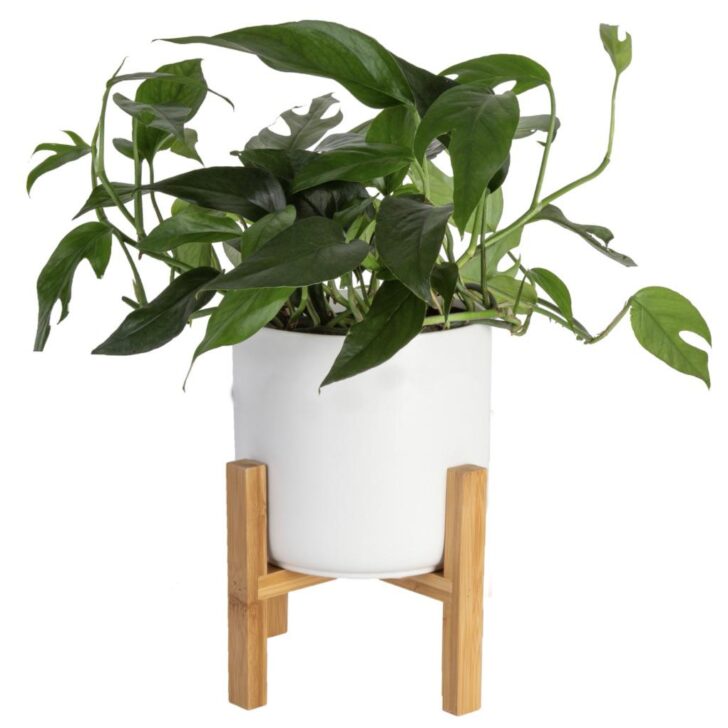
Common name: Baltic Blue Pothos
Botanical Name: Epipremnum pinnatum ‘Baltic Blue’. The Baltic Blue Pothos is a member of the genus Epipremnum, like all pothos. However, pothos come in two species- the more common aurerum, and the less common pinnatum, of which the Baltic Blue is a member.
Description
The Baltic Blue Pothos is an one of the less common pothos varieties. It has dark green leaves, which may develop a hint of blue as they develop, as long as they have adequate light. The Baltic Blue is closely related to the Cebu Blue Pothos, as both are pinnatum species rather than aurerum. Pinnatum leaves tend to be longer and narrower than most pothos with a sharp point at the end. The leaves of the Baltic Blue are shiny and smooth, and easily fenestrate such that they can even begin to look similar to Monstera plants.
The Baltic Blue Pothos is a comparatively compact pothos, only growing as long about 6 feet long. If you prefer a bushier, rather than a vinier plant, be sure to prune it regularly. To do so, you’ll want to trim the long, vining branches which will encourage new growth at the base. It is, however, a vining plant, and it will readily climb, if given the opportunity.
Preferences
Light
The Baltic Blue Pothos, like most varieties of Pothos, is pretty tolerant when it comes to light. It prefers medium, indirect light, but it can still do well with brighter or low light. With perfect, medium, indirect light, the Baltic Blue will have the most magnificent blueish green leaves. If light is too bright, the leaves will remain a brighter green. If sunlight is direct, the leaves may scorch.
Temperature
The Baltic Blue does well in a variety of indoor temperatures. In prefers warmer temperatures, 70°-90°F. It is not a cold tolerant plant and cannot survive outdoors in most climates. If you chose to bring your Baltic Blue outdoors, be sure it is brought back indoors before temperatures drop to 50°F or lower.
Watering
The Baltic Blue Pothos should be watered every 1-2 weeks. Make sure you are watering it appropriately by checking that the top inch or two of the soil has dried between waterings. The bottom should be damp but not saturated. Overwatering will stress the plant and the leaves may turn yellow. If the plant is not getting enough water, the leaves will wilt, but should be recoverable.
Humidity
The Baltic Blue Pothos is an easy-to-grow plant that isn’t picky about humidity. It grows well at nearly any humidity. But because it’s native habitat is high humidity, it doesn’t hurt to mist it from time to time, especially if you live in a particularly dry climate, or have air conditioning running regularly.
Soil
Like most pothos, the Baltic Blue a prefers well-draining soil that is rich in nutrients. The Baltic Blue will thrive in most commercially available potting soil mixes. It is not particularly picky about soil, so nearly any well draining soil will work just fine.
Care Tips
The Baltic Blue Pothos, like most pothos varieties, is a very easy to grow plant. It grows easily and well in most indoor settings and doesn’t require a ton of attention or special care to thrive. It isn’t particularly vulnerable to disease or to pests.
However, there are some common issues with pothos However, because all pothos are so similar, we’ve covered pothos troubleshooting in our Pothos post here.
We also discuss propagation of all pothos plants, since they all can be propagated the same way.
Safety Note
The Baltic Blue, like all pothos, is toxic to humans or pets if eaten. If you are concerned that a pet or child in your household may ingest a plant, be sure to keep this plant out of reach, or consider a less toxic alternative.