
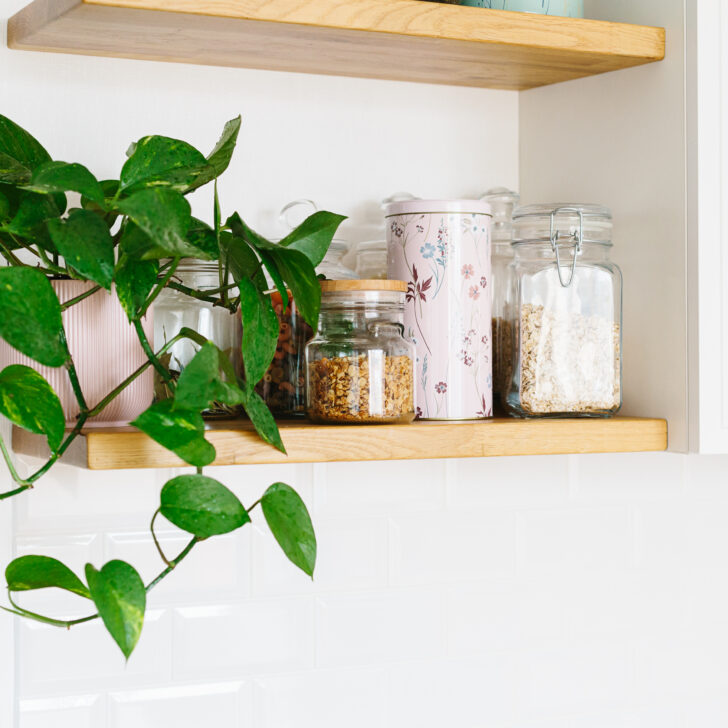
Common name: Pothos, Golden Pothos, Devil’s Ivy
Botanical Name: Epipremnum aureum
Pothos is perhaps the easiest house plant there is, making it a perfect choice for beginner house planters, lazy house plant gardeners, or anyone who doesn’t want to worry too much about perfect conditions for their house plant. There are TONS of great cultivators so there is sure to be a pothos that appeals to you.
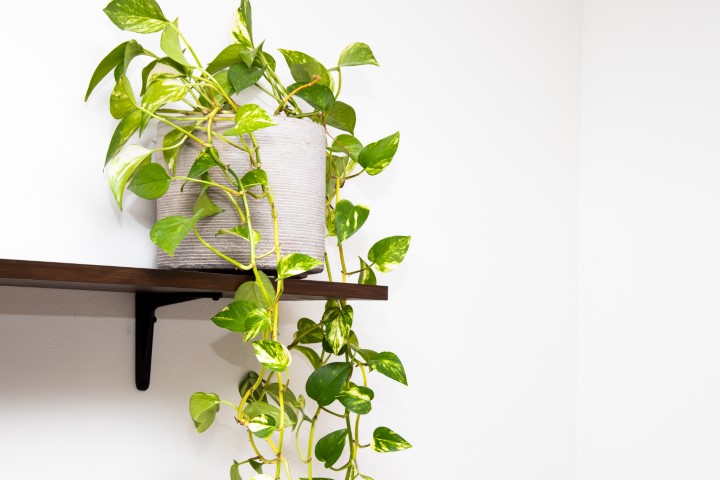
They are vining plants that will readily climb. Or this plant works great as a hanging plant, with vining limbs that trail over the sides. While each variety is different, pothos typically have glossy, heart-shaped leaves. When grown indoors, the plant typically will not flower.
Preferences
- Light: Pothos grow best in bright, indirect light. However, this easy to grow plant isn’t super particular about light. Watch out for scorched leaves, which can occur in direct light, or muted colors, which can occur if there isn’t enough light.
- Temperature: Pothos are native to the tropical climate of the Solomon Islands, making them well suited for warm temperatures, 70°-90°F. However, the plant can still do well in temperatures as low as 55°F. This plant is an ideal indoor plant as it thrives at ‘room temperature’ in most homes, but it can grow well outdoors in many climates, as long as it is brought indoors before temperatures drop to 50°F or lower.
- Watering: Pothos need to be watered every 1-2 weeks. Check to see that the soil has dried out a bit in the top inch or two before watering. This plant is not super particular about watering. However, with this plant, it’s best to err on the side of letting it dry out a little, rather than overwatering, leaving the plant soggy.
- Humidity: Pothos are not particular on humidity and can thrive in most humidity levels. However, it is a native to the tropics, so a little mist here and there can’t hurt.
- Soil: Pothos will thrive in a nutrient rich, well draining soil. However, this plant is not particularly picky about soil. It will grow well in nearly any commercially available potting soil. LIke most plants, root rot.
Troubleshooting:
Soft Brown roots, yellow or wilted leaves, soft stems:
- Cause: Root rot
- Remedy: The plant needs to be repotted with fresh, well-draining soil. Root rot is caused by a fungus in the soil, so you’ll need to get it out of that soil. Start by removing the plant from the old pot. Clean the plant gently, but thoroughly under cool, running water. Remove any brown, mushy roots using sharp scissors. You’ll want to just barely cut into the healthy root so that you’re sure you’ve removed all the infected root.
Replant in a clean pot, with well draining- soil. Be sure that you allow the plant to dry out slightly between waterings so that the root rot fungus cannot thrive.
Sterilize any tools used to remove the root rot with a 10% bleach solution and be sure you thoroughly clean the pot before using it for plants to prevent future root rot problems.
Faded or no variegation
- Cause: Not enough light
- Remedy: Move your pothos to spot with bright, indirect light for the most vibrant colors and variegation. Not possible? The plant can still thrive but it might not be quite as beautiful as it have been
Brown, crispy edges on some of the leaves
- Cause: Direct sunlight
- Remedy: Move the plant to bright, indirect light.
Yellow, dropping leaves
- Cause: Over- or underwatering.
- Remedy: Both over and underwatering can cause leaves to turn yellow and fall off the plant. If the soil is soggy, consider repotting with well draining soil. Then be sure the soil is allowed to dry out slightly between waterings. If the soil is bone dry, your pothos likely just needs a little water.
White, cottony growths on the bottom of leaves or on the plant stems
- Cause: Mealybugs
- Remedy: Use a cotton swab dipped in alcohol to remove the mealybugs. Repeat as needed. It may take a week or so to clear the plant of mealybugs. Fortunately, pothos aren’t vulnerable to many pests. Mealybugs are perhaps the only pest that can cause trouble for your pothos plant.
Propagation:
Pothos are easy to propagate. Trim a 3-4 inch long growth just below a node (where the leaves attach to the stem). Be sure the cutting is trimmed with clean, sharp scissors or knife. It’s best to use new growth stems for propagation. You can encourage new growth in your pothos by cutting back a long stem near the soil.
To help encourage rooting consider using a rooting powder. This is not necessary, but it can increase your chances of success. If you chose to use rooting powder, dip your fresh cutting in the powder
Place your cutting into a small pot with soil. If you have it, a seed-starting mix may be helpful.
Because pothos are easy to propagate, you can also simply place your cutting in water. Change the water frequently, and transfer your cutting to soil once you see roots emerging.
Pothos Varieties
Botanical Name: Epipremnum aureum/ Epipremnum pinnatum
Common Name: Devil’s Ivy
Pothos is an extremely common house plant. For many of us, this was our first plant. And perhaps our first pothos was grown from a clipping of our parents, neighbor’s, or friend’s pothos. But while many of us are familiar with the plant, you may not be familiar with all of its beautiful cultivars ranging in color from lime green, to dark blue-green to nearly white and everything in between. Even if you aren’t charmed by the pothos your parents or grandparents kept in their window, you might find that one of these beautiful pothos varieties is perfect for your collection!
- Golden Pothos: The golden pothos is possibly the most common house plant in the world because it’s such a low maintenance plant. It thrives in low light, and is not particularly vulnerable to pests, nor is it particular about moisture level or nutrients. The thick and waxy heart shaped leaves are green with splashes of golden-yellow.

- Jade Pothos: The Jade Pothos has quite large, dark green, heart-shaped, shiny leaves with no variegation. The jade is beautiful in its simplicity, and is one of the few pothos varieties without variegation.Because of the lack of variegation, the jade is more tolerant of low light.
- Hawaiian Pothos: The Hawaiian Pothos has large, heart shaped leaves, and yellow variegation. The variegation tends to be present as stripes coming from the center vein of the leaves. The Hawaiian Pothos is similar to the Golden Pothos in coloring,however leaf color tends to be a deeper green on the Hawaiian Pothos and the yellow variegation on the Hawaiian Pothos may not be as vibrant as that of the Golden Pothos.
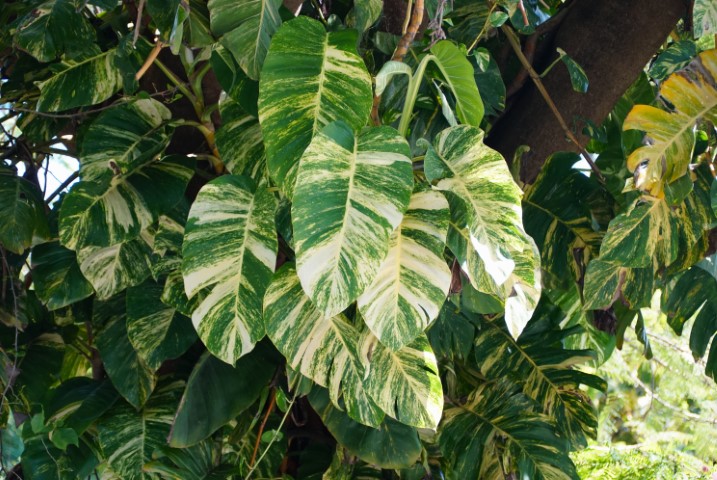
- Baltic Blue Pothos: The Baltic Blue Pothos has dark green leaves that may develop a hint of blue as they mature, hence the name. The leaves, while still heart shaped like most pothos, are longer and narrower than most types. The leaves tend to fenestrate, or split, giving them a unique, and beautiful in my opinion, look.
- Cebu Blue Pothos: Cebu Blue Pothos is very similar to, and often confused with the Baltic Blue. Both have dark leaves that are long and narrow, but the Cebu Blue leaves are smaller. The Cebu Blue coloring is dark green with a silvery tint to it and the leaves are much less likely to fenestrate.

- Marble Queen Pothos: The Marble Queen Pothos is another extremely common and very easy to care for variety of pothos. As the name suggests, the variegation on the Marble Queen marbling is pale yellow or white in color against a bright green leaf. Leaves are large and heart shaped, as is typical for pothos.
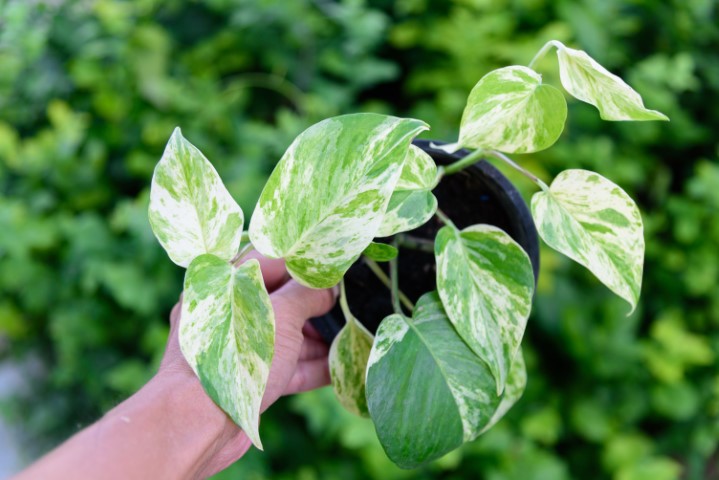
- Pothos N’joy: N’joy is closely related to the Marble Queen, but it isn’t obvious from its appearance. It has a distinct smaller leaf size and slower growth, compared to the Marble Queen and most pothos plants, making it a great house plant for those with smaller spaces. N’joy has vibrant, bright green leaves mottled with a creamy white often on the edges of the heart-shaped leaves. One important note on the N’joy is that it tends to lose some of its variegation if grown in low light.
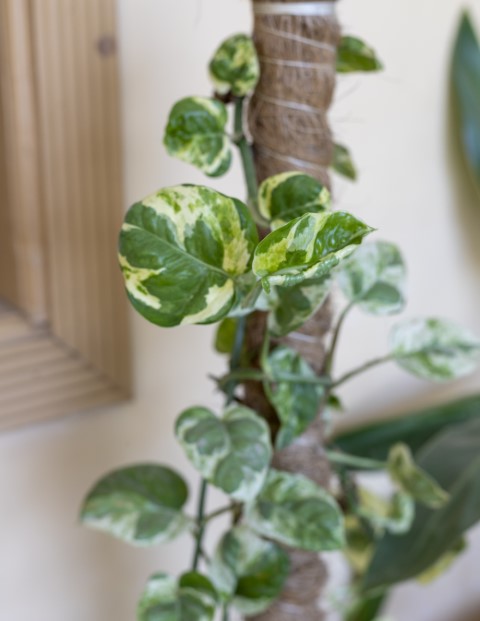
- Pearls and Jade Pothos: Pearls and Jade Pothos is another close relative to the Marble Queen, and is very similar to the N’Joy Pothos. However, the variegation on the Pearls and Jade Pothos tends to be closer to a marbling, while the N’Joy is more mottled. The Pearl and Jade Pothos may have white, cream, or pale yellow variegation and the leaves tend to be bright green in color. The leaves on the Pearls and Jade are heart shaped and medium sized (larger than the N’Joy, but smaller than most other pothos varieties).
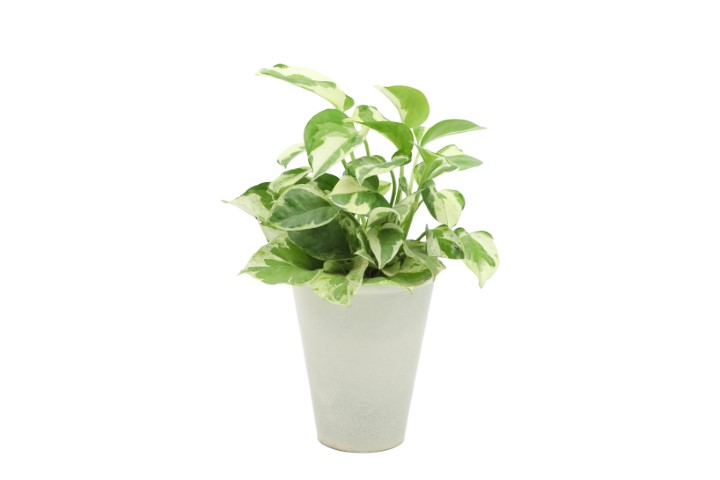
- Jessenia Pothos: The Jessenia Pothos has a variegation similar to the Marble Queen, except the Jessenia has lime green, rather than white, variegation. The leaves are large and heart shaped, similar to the Marble Queen.
- Snow Queen Pothos: The Snow Queen Pothos is often confused with the Marble Queen, but they do have subtle differences. The Snow Queen tends to have more variegation, and it will be more white compared to a creamy, nearly yellow on the Marble Queen. The leaves on both are large, waxy, and heart shaped, but the Snow Queen has a sharper point at the end. It’s also notable that the Snow Queen is fussier and more difficult to care for compared to the Marble Queen, so you’ll want to be sure you know which type you have!
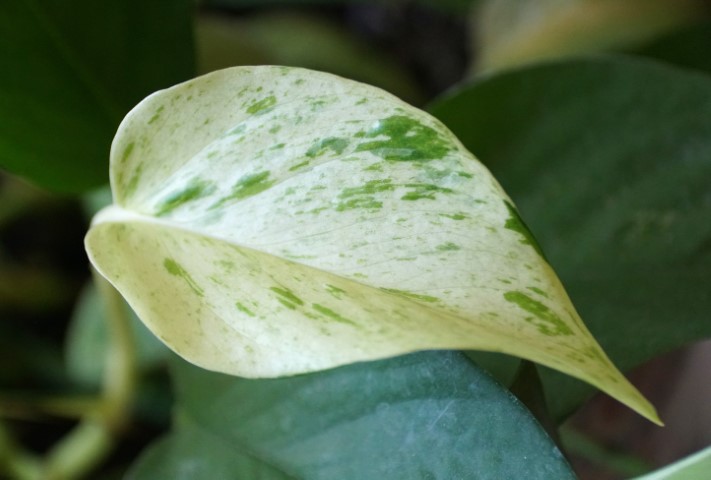
- Glacier Pothos: The Glacier Pothos is similar in appearance to a few other cultivars; the N’joy Pothos, and Pearls and Jade Pothos. There are a few subtle differences that will help you differentiate. The Glacier, Pearls and Jade, and N’joy will all have green leaves with white blotches, but the glacier is the only one with a silver coloring. The NJoy has less of a color gradient between the green and white than does Glacier. Also, the leaves on the Glacier Pothos are smaller than either Pearls and Jade or NJoy.
- Neon Pothos: As the name suggests, the Neon Pothos has bright neon, or lime green leaves. The leaves are larger than most other varieties. They are heart shaped and the plant is very easy to care for, as is typical for pothos.
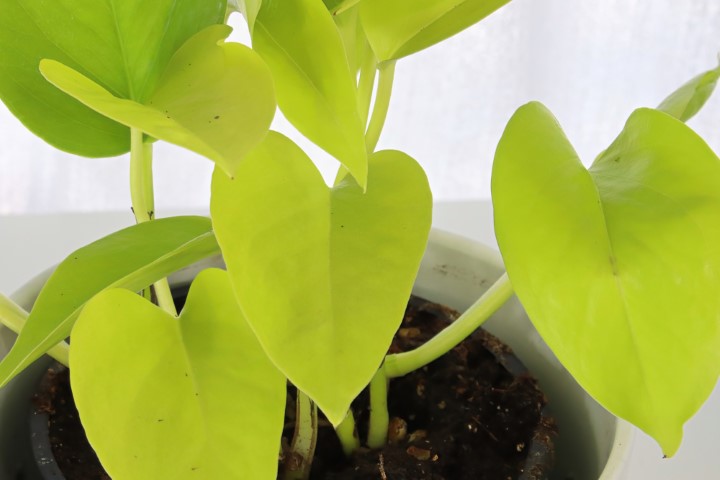
- Shangri La Pothos: The Shangri La Pothos, commonly called the sleeping pothos or sometimes the spinach pothos (because it resembles cooked spinach), is an exceptionally rare, and very distinct variety of pothos. The biggest difference between Shangri La Pothos, compared to most other pothos, is that the Shangri La’s leaves are wrinkled and curled up. The leaves are a deep green color often with lighter green variegation.
- Satin Pothos: The Satin Pothos, also known as Silver Pothos, has medium-sized, heart shaped leaves, as is typical for pothos. The leaves are dark green with small splashes of a silvery, light green. LIke many other pothos varieties, the variegation may fade in low light.
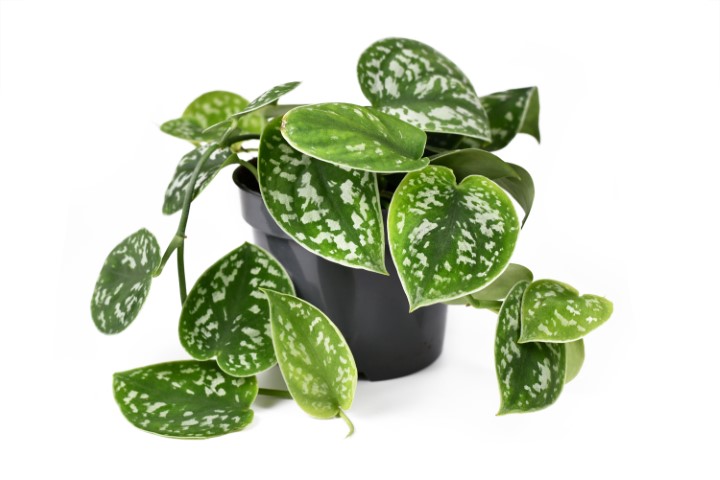
- Manjula Pothos: The Manjula pothos look similar to the Pearls and Jade Pothos, but there is a lot of variation within this cultivar. The leaves are a dark green with silvery-green and lime green variegation. Some plants will have a slight marbling pattern, while other, more mature plants will look as though the leaves have been painted with long strokes in shades of green. The leaves have some curling on the edges.
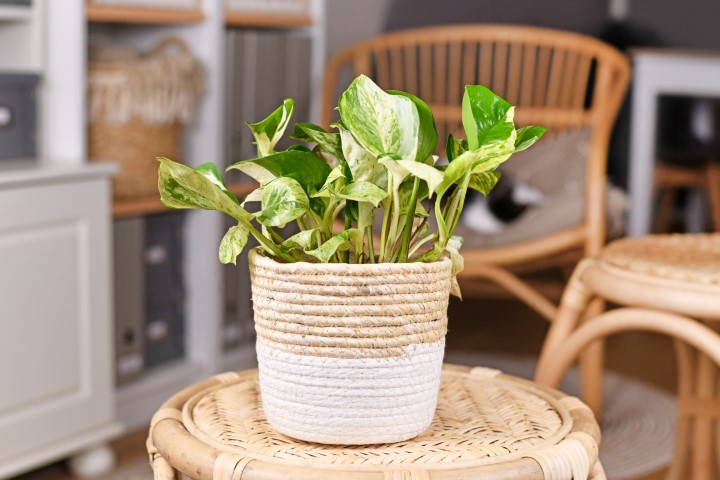
- Harlequin Pothos: The Harlequin is often sold as a separate cultivar, but it is believed to actually be just an intensely variegated coloring of Manjula Pothos. The leaves are often nearly completely white, with patches of green. They are heart shaped and waxy, but thin and tend to curl slightly.
- Global Green Pothos: The Global Green Pothos is a rare pothos variety with shiny, dark green with bright green splotches. The leaves are longer and narrower than typical pothos leaves, but they could still be described as heart shaped.